
Eduniversal Best Masters Ranking 2026 in Sustainable Development and Environmental Management in TOP 20 North America
Rankings updated annually. Next full edition: March 2027.
Explore the expanding opportunities in Sustainable Development and Environmental Management Master's programs in North America by 2026. This article provides insights on market trends, curriculum evolution, skills development, employability, and future outlook. Discover how interdisciplinary learning addresses global challenges and supports green career paths across industries.
Discover Eduniversal Best Masters Ranking in Sustainable Development and Environmental Management in North America

U.S.A.
U.S.A.
Canada
U.S.A.
U.S.A.
U.S.A.
U.S.A.
U.S.A.
Canada
U.S.A.
U.S.A.
U.S.A.
U.S.A.
Canada
U.S.A.
Master’s in Sustainable Development and Environmental Management: Specialization, Application and Career Opportunities.
Overview of Sustainable Development Master’s Growth in North America (2026)
The Master’s degree specialization in Sustainable Development and Environmental Management in North America is witnessing notable expansion. Driven by increased global awareness, stricter environmental policies, and a need for specialized sustainability expertise, these programs are seeing a surge in demand from both domestic and international students.
This movement parallels the growth of other future-facing disciplines like corporate social responsibility and Green Finance, reinforcing the strategic need for climate-conscious education and career preparation.
Current Market Context and Size
Though precise statistics for Sustainable Development and Environmental Management Master’s students remain fragmented, the broader environmental education market has steadily expanded over the past five years. North American programs attract a diverse, international student body, motivated by progressive sustainability standards and robust research infrastructures. This reflects a trend also visible in international management studies across North America.
Macro drivers such as climate stress, regulatory frameworks, and ESG-related mandates from corporations contribute heavily to this growth. Notably, green skills shortages and geopolitical tensions highlight the vital value of resilience training.
Curriculum Innovation and Educational Trends by 2026
Today’s sustainability Master’s programs emphasize interdisciplinarity, merging environmental science with policy, economic theory, and cutting-edge tech applications such as AI, GIS systems, and scenario modeling. As seen in similar fields like data analytics, technical fluency is becoming standard in sustainability tracks.
The trend toward modular, stackable certification pathways also fuels lifelong learning. This flexibility supports professionals seeking micro-credentials or online/hybrid learning modalities. Emerging specializations include biodiversity, sustainable infrastructure, circular economy, and green finance—areas reflecting broader social and market transitions.
In-Demand Skills and Career Prospects
Graduates are now expected to leave programs with a blend of technical expertise (e.g., environmental data, GIS, AI for sustainability) and soft leadership skills. Strategic roles such as sustainability manager, environmental consultant, ESG analyst, and CSR lead remain top career choices.
Work-integrated learning—like internships and real-world capstone projects—reinforces employability, facilitating transitions to both government roles and private-sector sustainability teams. As in disciplines like Leadership training, this practical edge significantly heightens job market readiness.
Education Quality and Regulatory Standards
North American sustainability programs are regulated by national accreditation bodies to uphold educational standards. Many align programs with global benchmarks such as the UN’s Sustainable Development Goals (UN SDGs) and ESG reporting standards (e.g., GRI, SASB).
Visa policies and credit transfer systems influence international flow, and political dynamics may play a key role. There are ongoing policy adaptations to retain skilled graduates domestically, indicating a high demand for sustainability-oriented professionals comparable to strategic fields like Public Administration.
Access, Tuition Costs, and ROI Considerations
Tuition costs for these Master’s programs range from moderate to high, depending on each institution and study format. Scholarship funding, while available, doesn't uniformly cover costs, prompting discussions around equal access and affordability. However, graduates often realize strong return on investment (ROI), with faster career mobility and access to leadership roles in sustainability sectors.
This ROI dynamic is akin to professional fields such as full-time MBAs, where strategic positioning often results in higher long-term earning potential.
Competitive Landscape and Global Movements
North America remains a top destination for sustainability Master's studies, although competition both locally and internationally has intensified. Student mobility is increasing, with dual degrees and EdTech partnerships contributing to a more globalized education experience and diversified learning formats.
Outbound flows are also on the rise as domestic students seek international sustainability credentials, creating a bidirectional exchange similar to multidisciplinary programs in Innovation & Project Management.
Challenges and Future Pathways (2026–2028)
Sustainable Development and Environmental Management programs face challenges including high tuition, a shortage of faculty skilled in new tech, and the need for expanded infrastructure supporting hybrid learning. Political inconsistency across federal and state levels adds another layer of unpredictability, especially in policy-driven curriculum design.
Nevertheless, forecasts between 2026 and 2028 suggest optimistic growth scenarios. Expect deeper integration of technologies like augmented reality, digital twins, and AI tools in sustainability education. These developments mirror advances in other tech-based academic tracks such as Cybersecurity and Systems Security.
Incentives pushing for workforce re-skilling, governmental green investment, and international sustainability agreements will support innovation in key subfields such as circular economy governance, biodiversity analytics, and sustainable city planning.
Conclusion and Strategic Importance of Sustainability Education
As climate impacts and ecosystem degradation intensify globally, the role of educated sustainability professionals becomes ever more critical. Master’s programs in Sustainable Development in North America will continue serving as vital bridges between research, policy, and practice.
By aligning curricula with labor market demands and enhancing cross-sector collaboration, these programs are at the forefront of promoting actionable change—empowering the next generation to lead in building resilient, just, and regenerative futures.
Latest news

Discover which business schools let you study in 3 different countries within a single degree. Compare ESCP, Skema, EM Normandie, and EDHEC on campus access, costs, and degree recognition.
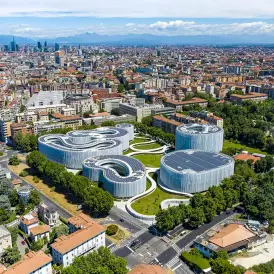
Explore Bocconi's visionary 2026–2030 Strategic Plan, aimed at bolstering executive leadership, management training, and global expansion.

HEC Paris unveils “Dare the Impossible,” a new brand signature highlighting innovation, leadership, and its vision for education in a rapidly changing world.
