
Eduniversal Best Masters Ranking 2026 in Innovation and Project Management
Master in Project Management & Innovation: Lead Change and Deliver Impact. In 2026, this degree prepares future leaders to manage complex projects and drive innovation across industries. Combining agile methods, strategic thinking, and sustainability, it equips graduates to lead transformation, manage risk, and create value in a fast-evolving global environment.

Master’s in Innovation and Project Management: Specialization, Application and Career Opportunities.
Innovation and project management sits at the intersection of two of the most in-demand competencies in the modern economy: the ability to drive new ideas from concept to execution, and the rigour to deliver complex initiatives on time, on budget, and at scale. Organisations across technology, infrastructure, healthcare, consulting, and energy transition are actively seeking professionals who can do both, and postgraduate education in this field has expanded accordingly.
The Eduniversal Best Masters Ranking brings together the top MSc, MS and MBA programmes in Innovation and Project Management from around the world, evaluated annually against three independently verified criteria: reputation on the job market, first employment salary, and student satisfaction. Whether you are a recent graduate scoping your first step into project leadership or a professional considering a formal qualification to step into senior programme management, this ranking provides a globally comparative, market-grounded starting point for your research.
The programmes listed here span a wide range of formats and geographies, from intensive full-time MSc programmes in Western Europe to part-time and online tracks suited to working professionals. Use the ranking as a comparative lens, then examine the criteria that matter most for your situation: area of specialisation, language of instruction, programme format, regional employer access, and tuition.
What Is the Eduniversal Ranking for Innovation and Project Management?
The Eduniversal Best Masters Ranking in Innovation and Project Management evaluates programmes across 137 countries on three measurable criteria: reputation on the job market, first employment salary, and student satisfaction. Now in its 12th edition, the ranking covers nearly 6,000 programmes across more than 50 specializations and 9 regions worldwide, offering one of the broadest comparative views of postgraduate education in this field available anywhere.
Unlike self-promotional school pages or regionally limited listicles, the Eduniversal ranking applies a single consistent methodology to every programme it covers, from a specialist MSc in agile project leadership in the Netherlands to a dual-degree innovation management programme in Singapore. That consistency is what makes it a useful decision-making tool for candidates with an international perspective.
How Schools Are Evaluated
Every program in the Eduniversal Best Masters Ranking is assessed through a single, consistent methodology built on three criteria, each worth 5 points for a maximum final score of 15.
- Reputation on the job market (5 points) - Half of this score reflects the opinions of recruiters, and half reflects the level of the school's Palme d'Excellence.
- First employment salary (5 points) - Reported by each program and verified by Eduniversal, weighted by country and by the average annual salary of executives, with three scales applied according to the type of program (full-time MBA, Executive MBA, and all other programs).
- Student satisfaction (5 points) - Measured through an 11-question survey sent to graduating students, scored only when at least 10% of a program's graduating cohort responds.
The combined score places each program on a four-star scale: 1 star (1-5.99), 2 stars (6-8.99), 3 stars (9-11.99), and 4 stars (12-15). This is the Eduniversal Best Masters Ranking methodology applied identically to every program worldwide.
Why Use a Ranking to Choose an Innovation and Project Management Master's?
The number of postgraduate programmes in project management and innovation has grown substantially over the past decade, with institutions across Europe, North America, and Asia all launching specialist MSc and MS tracks to meet employer demand. The challenge for candidates is that this expansion has also produced a large volume of programmes with very different levels of market recognition and graduate outcomes.
A ranking built on verified professional criteria, rather than on marketing spend or institutional prestige alone, offers a practical filter. It gives candidates a shortlist of programmes that have demonstrated value to employers and to recent graduates, which is a more actionable starting point than browsing school websites independently. That said, a ranking position is a first step, not a final decision. Career goals, preferred format, geographic focus, and budget all require personal evaluation beyond what any ranking can provide.
What Does a Master in Innovation and Project Management Cover?
A Master in Innovation and Project Management combines project delivery frameworks with innovation strategy, digital transformation tools, and organisational leadership, preparing graduates to manage complex, high-impact initiatives across industries. The curriculum typically runs 12 to 24 months in a full-time format, with part-time and blended options increasingly available for professionals who cannot step away from work entirely.
The scope of these programmes has broadened considerably in recent years. Beyond classical project planning and control, top-ranked programmes now integrate agile methodologies, sustainability governance, and cross-functional change management as core content areas, reflecting the realities of how organisations actually run projects today.
Core Curriculum Areas
While curricula vary across institutions, the following areas appear consistently in well-regarded programmes:
- Agile and hybrid delivery frameworks: Scrum, Lean, SAFe, DevOps, and hybrid approaches that combine traditional waterfall planning with iterative delivery cycles
- Strategic project and portfolio management: prioritisation, resource allocation, programme governance, and stakeholder management at scale
- Innovation strategy and management: design thinking, business model innovation, R&D pipeline management, and managing ideation-to-launch processes
- Digital transformation and data-driven decision-making: applying tools such as MS Project, Power BI, and Jira to project oversight, with an increasing focus on AI-assisted project analytics
- ESG and sustainable project leadership: integrating environmental, social, and governance considerations into project design and delivery, which is now a standard expectation in many industries
- Change management: leading organisational transitions, managing resistance, and sustaining programme outcomes beyond delivery
Many programmes complement coursework with live client projects, international consulting assignments, or structured placements in organisations running large-scale transformation programmes.
Formats and Locations
Full-time MSc and MS programmes remain the most common entry point for recent graduates seeking to build project management expertise from a solid academic foundation. These programmes are well represented in Western Europe, particularly in France, the Netherlands, the United Kingdom, and Germany, where the density of consulting firms, engineering groups, and technology companies creates strong placement access.
Part-time, executive, and online formats are increasingly available for working professionals. These tracks tend to attract candidates already in project-adjacent roles, such as business analysts, engineers, or operations managers, who want to formalise their skills and move into programme leadership positions. For professionals exploring general management alongside project leadership, consulting and strategy programmes offer a complementary angle worth considering.
Career Paths After a Master in Innovation and Project Management
Graduates of top-ranked programmes in Innovation and Project Management enter roles such as Project Manager, Innovation Lead, PMO Director, and Digital Transformation Consultant across technology, consulting, healthcare, and infrastructure sectors worldwide. The profile of a well-trained project management graduate is broad by design: the ability to coordinate complex, multi-stakeholder initiatives translates across virtually every industry that runs projects at scale, which is most of them.
Employers in this space range from large consulting firms and technology integrators to multinational corporations running internal transformation offices, infrastructure developers, healthcare systems, energy transition companies, and public sector organisations.
Key Roles Across Sectors
The roles most frequently targeted by Innovation and Project Management graduates include:
- Project Manager or Programme Manager: planning, executing, and closing projects across technology, construction, energy, healthcare, NGOs, or consulting
- Innovation Project Lead or New Product Development Manager: managing the pipeline from ideation through proof-of-concept to commercial launch
- Change and Transformation Manager: leading organisational change programmes, often within large enterprises or management consulting engagements
- PMO Leader or Portfolio Manager: overseeing the programme management office, standardising delivery practices, and ensuring strategic alignment of the project portfolio
- Digital Transformation Consultant: advising organisations on restructuring their operations, systems, and processes around digital capabilities
Candidates with a strong background in operations may also find natural pathways into supply chain and logistics management, where project governance skills are directly applicable to network redesign, procurement transformation, and operational improvement initiatives.
Salary Outlook
Compensation for project management professionals varies significantly by geographic market, sector, seniority, and the scale of programmes managed. Entry-level project manager roles in Western Europe and North America offer competitive graduate packages, with significant progression tied to the complexity and visibility of projects delivered.
Senior programme directors and PMO leaders at major corporations or consulting firms command packages that reflect the organisational risk they manage. Markets in Asia-Pacific, particularly Singapore, Japan, and Australia, have seen growing demand for project management talent with both technical depth and international stakeholder experience, which has supported competitive compensation levels in those regions.
Professionals who complement a project management degree with recognised certifications, such as the PMP from the Project Management Institute (PMI), or with sector-specific experience in high-growth areas like energy transition or digital health, tend to access faster career progression and stronger earnings trajectories.
How to Choose the Right Master in Innovation and Project Management
When choosing a Master in Innovation and Project Management, candidates should compare programmes by region using the Eduniversal ranking, cross-check with relevant accreditations (AACSB, EQUIS, PMI), and consider whether a specialist master's or a broader MBA better matches their career stage and goals.
Beyond rank position, several dimensions deserve careful evaluation before committing to a programme.
Sector and methodology focus: some programmes lead with agile and digital transformation, while others emphasise infrastructure project delivery, innovation strategy, or programme governance in complex organisations. If your target role is specific, matching the programme's methodological emphasis to that sector will make a material difference in the relevance of your curriculum and the quality of your placement connections.
Accreditations and professional recognition: school-level accreditations (AACSB, EQUIS, AMBA) and programme-level credentials (PMI-accredited programmes) are complementary to, not substitutes for, a ranking-based comparison. They signal quality control and employer recognition from different angles.
Geographic employer access: where you study shapes where you can realistically build your professional network. A programme in London or Paris gives you proximity to the consulting firms and corporate transformation offices that recruit heavily from those ecosystems. A programme in Singapore or Sydney gives you access to Asia-Pacific infrastructure and technology markets. Use the Eduniversal regional rankings to match programme location with your target employment geography.
Specialisation vs Generalist Programmes
A generalist MSc in Innovation and Project Management gives you a foundation broad enough to move across industries, which is valuable if you are early in your career and have not yet committed to a specific sector. A more specialised programme, whether focused on digital transformation, sustainable infrastructure, or innovation governance, offers deeper immersion and tends to appeal to employers looking for candidates with a specific operational profile.
Candidates drawn to the entrepreneurial dimension of innovation management may find that exploring entrepreneurship programmes offers a useful complementary perspective on venture creation, new market entry, and innovation-driven growth, alongside or instead of a project management track.
Regional Strengths
Certain regions have built recognised depth in innovation and project management education:
- Western Europe: the UK, France, the Netherlands, and Germany host well-established programmes with strong links to engineering, consulting, and technology employers. Schools such as SKEMA, Centrale, and Cranfield have histories in this field worth examining (consult the current edition of the ranking for exact positions).
- North America: the United States and Canada offer a dense ecosystem of programmes, with strong employer access in technology, healthcare, and financial services. Graduate programmes at institutions across the northeast and west coast are regularly evaluated in the Eduniversal ranking.
- Far East Asia: Singapore, Japan, South Korea, and China have developed strong postgraduate offerings aligned to the infrastructure, technology, and digital transformation demands of those economies. Consult the current edition for exact positions in this region.
- Central and Eastern Europe: a growing cluster of programmes has emerged in Poland, the Czech Republic, and Romania, often with strong engineering and IT project management orientations.
The ranking is updated annually. Consult the current edition for exact positions in each region.
Explore Rankings by Region
The Eduniversal Best Masters Ranking covers 9 world regions. Browse the regional rankings below to find top-ranked Innovation and Project Management programmes in your target geography.
- Africa
- North America
- Latin America
- Central Asia
- Eurasia and Middle East
- Central and Eastern Europe
- Western Europe
- Oceania
- Far East Asia
FAQ: Frequently Asked Questions About Innovation and Project Management Master's
Is a Master in Project Management worth it?
The value of a master's in project management depends on your career stage, target sector, and the programme you choose. For candidates aiming to move into formal programme leadership, PMO roles, or transformation consulting, a degree from a programme well-regarded by employers provides a clear signal that self-study or on-the-job experience alone cannot replicate. The global demand for professionals who can manage complex, multi-stakeholder projects across technology, infrastructure, and energy transition remains consistent across most major economies. Choosing a programme that ranks well on the "reputation on the job market" criterion in the Eduniversal ranking is one practical way to assess whether that signal is genuinely recognised by recruiters.
What is the difference between a Master in Project Management and an MBA?
A Master or MSc in Project Management is a specialist degree, typically lasting 12 to 24 months, designed for candidates who want to build deep competency in project delivery, programme governance, and innovation management. It is well-suited to recent graduates or early-career professionals targeting specialist roles in project or programme management. An MBA is a generalist management degree designed for mid-career professionals with several years of experience, covering finance, strategy, operations, and leadership more broadly. If your goal is a senior general management role and you already have project experience, an MBA may be a better fit. If you want to become a recognised project or programme specialist, a dedicated master's offers more targeted preparation. You can compare both tracks via the Executive MBA ranking.
Which countries offer the best Masters in Innovation and Project Management?
The Eduniversal Best Masters Ranking identifies strong programmes in project management and innovation across multiple regions. Western Europe, particularly the UK, France, the Netherlands, and Germany, has a dense cluster of well-regarded programmes with strong employer ecosystems. North America, including the US and Canada, offers broad coverage across technology, consulting, and healthcare sectors. Far East Asia, notably Singapore and Japan, has developed recognised capacity in programmes aligned to digital transformation and infrastructure. The ranking is updated annually: consult the current edition for exact positions by region.
How is the Eduniversal Innovation and Project Management ranking built?
The Eduniversal Best Masters Ranking evaluates each programme on three independently verified criteria: reputation on the job market (combining the opinions of recruiters at 50% and the school's Palme d'Excellence at 50%), first employment salary (reported by each programme and verified by Eduniversal against national and executive salary averages), and student satisfaction (from an 11-question survey requiring responses from at least 10% of the graduating cohort). Each criterion is worth 5 points, for a maximum score of 15. This methodology distinguishes the Eduniversal ranking from lists based on reputation surveys alone or on self-reported data. It is applied identically to all programmes in all 137 countries covered.
Can I study Innovation and Project Management online?
Many programmes ranked in the Eduniversal Best Masters Ranking offer hybrid or fully online formats, particularly for part-time and executive tracks. Online availability varies by region and by institution: it is most common in North America and increasingly available in Western Europe. Full-time MSc programmes remain predominantly campus-based, but blended formats, combining online coursework with intensive residential modules, are growing. Consult the individual programme pages for details on format, duration, and online availability.
What careers can I pursue after a Master in Innovation and Project Management?
Graduates of top-ranked programmes typically enter roles such as Project Manager, Programme Manager, PMO Director, Innovation Project Lead, Change and Transformation Manager, and Digital Transformation Consultant. Hiring sectors span technology, management consulting, construction and infrastructure, energy transition, healthcare, financial services, and the public sector. Professionals who continue to develop their expertise and supplement their degree with recognised certifications, such as the PMP from the Project Management Institute (PMI), tend to access broader career opportunities and more senior roles over the course of their careers.
Latest news

Discover which business schools let you study in 3 different countries within a single degree. Compare ESCP, Skema, EM Normandie, and EDHEC on campus access, costs, and degree recognition.
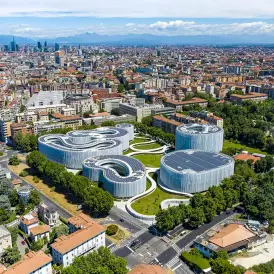
Explore Bocconi's visionary 2026–2030 Strategic Plan, aimed at bolstering executive leadership, management training, and global expansion.

HEC Paris unveils “Dare the Impossible,” a new brand signature highlighting innovation, leadership, and its vision for education in a rapidly changing world.
