
Eduniversal Best Masters Ranking 2026 in Sustainable Development and Environmental Management in TOP 15 Far East Asia
Rankings updated annually. Next full edition: March 2027.
Explore the dynamic growth of Master’s programs in Sustainable Development and Environmental Management across Far East Asia in 2026. This article covers market size, academic trends, skills demand, and the evolving educational ecosystem shaped by sustainability goals. Gain an in-depth look at employability, curriculum innovation, and international collaboration in this thriving academic field.
Discover Eduniversal Best Masters Ranking in Sustainable Development and Environmental Management in Far East Asia

South Korea
China
Malaysia
Hong Kong (S.A.R.,China)
Thailand
China
Thailand
China
Malaysia
China
Japan
Thailand
Thailand
China
Master’s in Sustainable Development and Environmental Management: Specialization, Application and Career Opportunities.
Growing Demand for Sustainability-Focused Master's Programs in Far East Asia
The Master’s market specializing in Sustainable Development and Environmental Management across Far East Asia in 2026 is growing steadily, driven by escalating regional sustainability commitments and an expanding skills demand in the green transition. Although precise student numbers in this specialization are sparse, the overall Master’s enrolment in these countries shows consistent year-on-year growth, with a marked increase in international students, reflecting rising cross-border educational exchange and global sustainability imperatives.
Recent reports indicate a backdrop of robust economic growth in Far East Asia coupled with stringent environmental regulations and sustainability policies aligned with global frameworks such as the UN Sustainable Development Goals (SDGs). These macro drivers—economic expansion, policy tightening, digitalization trends, and geostrategic sustainability priorities—have fuelled higher academic and professional interest in sustainability disciplines.
For those simultaneously exploring broader leadership frameworks, the General Management master's programs may also offer foundational insights to pair with sustainability education.
Market Size and Regional Context
The exact number of students enrolled in Sustainable Development and Environmental Management Master’s programs is not publicly consolidated. However, the broader postgraduate education market in countries like China, South Korea, Japan, and Southeast Asian members is expanding, with international student shares rising due to dynamic bilateral scholarship programs and a push for regional leadership in sustainability-focused education. Countries in the region are among the fastest progressing on SDGs globally, especially socio-economic and environmental targets, showcasing both urgent need and governmental support for sustainability expertise.
As interest in specialized environmental fields increases, prospective students may also explore emerging options like Environmental Risk and Security for complementary learning opportunities.
Curriculum Evolution and Learning Trends in 2026
Programs exhibit strong interdisciplinarity, merging environmental sciences with economics, public policy, business management, and digital technologies. Emerging niches include climate risk modeling, circular economy, biodiversity conservation, and sustainable urban development. Curriculum design increasingly embraces experiential learning—of particular note are capstones with industry, government, and NGO collaborations, internships, and challenge-based projects directly tackling real-world sustainability problems.
Digitalization infuses curricula through incorporation of AI, advanced data analytics, and geospatial technologies (e.g., GIS, remote sensing), enabling students to engage in environmental modeling and scenario planning. Micro-credentials and modular, stackable course options support lifelong learning and flexible upskilling pathways, accommodating working professionals and diverse learner profiles.
Students with a passion for project-based innovation may find relevant parallels in Innovation and Project Management programs which align with the applied nature of sustainability education.
Career Paths, Skills Development, and Industry Applications
Graduates are sought after for roles where they integrate technical skills—such as ESG reporting, climate risk assessment, sustainability analytics, policy analysis—with transversal competencies including leadership, cross-cultural teamwork, and strategic communication. Typical employment sectors span corporate sustainability departments, environmental consultancies, governmental agencies, NGOs, and research institutes.
Common roles include Sustainability Manager, Environmental Analyst, Policy Advisor, and Project Manager for CSR and sustainable urban planning, with ascending responsibility pathways reported. Internship and apprenticeship offerings are widely embedded to bridge academia and practical work experience.
Those looking to combine sustainability expertise with digital economy insight may consider paths like E-Business and Digital Marketing, particularly as more green jobs require tech integration.
Quality Assurance, Recognition, and Graduate Mobility
Quality assurance and accreditation frameworks in the region are strengthening, aligning domestic programs with international sustainability standards, often incorporating UN SDG benchmarks into academic accreditation criteria. Many programs feature international recognition facilitating credit transferability, with countries like Singapore, South Korea, and Japan facilitating graduate mobility through streamlined visa and work policies favorable to sustainability graduates.
Students wishing to pursue global mobility may compare criteria and opportunities found in International Management degrees for alignment with transnational career goals.
Access, Tuition Costs, and Financial Assistance
Tuition ranges vary widely, influenced by country, institution type, and program delivery mode; flagship institutions command higher fees, while public universities offer lower-cost options often supplemented by government scholarships and employer sponsorships. Increased public funding reflects national priorities on sustainability capacity building, while ROI considerations favor programs with strong industry linkage and placement records.
Some students may explore adjacent disciplines such as Green Finance or Corporate Social Responsibility if aligned funding and scholarships support long-term objectives.
Competitive Landscape and International Collaborations
The region’s Master’s landscape in this specialization is highly competitive with significant inbound student flows from neighboring countries in Southeast and South Asia, alongside outbound mobility to Western institutions. Dual degrees and cross-border partnerships leveraging EdTech platforms foster internationalization and broaden access. Several universities have strategic alliances with global sustainability networks and industry consortia, enhancing research and learning opportunities.
Students interested in cross-disciplinary alternatives might consider management specialties such as Human Resources Management or Risk Management, which are becoming increasingly relevant in global sustainability frameworks.
Challenges, Risks, and Strategic Outlook (2026–2028)
Primary challenges include affordability pressures constraining access for lower-income cohorts, uneven research infrastructure limiting innovation, faculty shortages in niche sustainability domains, and the need to continually align curricula with rapidly evolving labor-market skills. Technology adoption is uneven but accelerating, with increased integration of AI and data science noted as critical future enablers. Talent attraction remains competitive globally, with the risk of brain drain countered by strengthened regional incentives.
Looking ahead, baseline scenarios project continued growth in student enrolment and institutional capacity in Sustainable Development and Environmental Management, supported by persistent policy emphasis on climate action and sustainable urbanization. Upside scenarios envisage disruptive innovation in curriculum design enabled by digital platforms, expanded lifelong learning models, and stronger public-private collaboration in green skills development.
Those pursuing innovation-driven learning may wish to follow emerging pathways highlighted in the Innovation Awards programs, bringing unique value to sustainability-focused careers.
Latest news

Discover which business schools let you study in 3 different countries within a single degree. Compare ESCP, Skema, EM Normandie, and EDHEC on campus access, costs, and degree recognition.
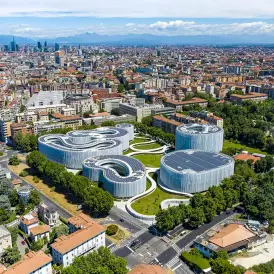
Explore Bocconi's visionary 2026–2030 Strategic Plan, aimed at bolstering executive leadership, management training, and global expansion.

HEC Paris unveils “Dare the Impossible,” a new brand signature highlighting innovation, leadership, and its vision for education in a rapidly changing world.
