
Eduniversal Best Masters in General Management in Russia
Russia’s Master’s in Management (MiM) market is undergoing transformation, with increasing digitalization, curriculum innovations, and shifting labor demands. This article explores enrollment trends, curriculum updates, employability, and international dynamics as of 2025 and beyond. Learn how Russia is adapting its MiM education to global challenges.
Discover in detail the Master in General Management in Russia
Context and Market Size of the Russian MiM Landscape
Russia’s Master’s in Management (MiM) market is undergoing transformation, with increasing digitalization, curriculum innovations, and shifting labor demands. This article explores enrollment trends, curriculum updates, employability, and international dynamics as of 2025 and beyond. Learn how Russia is adapting its MiM education to global challenges.
Context and Market Size of the Russian MiM Landscape
By 2025, the Master’s in Management (MiM) education segment in Russia reflects a steadily growing academic market. Across the past 3–5 years, Russia has witnessed moderate expansion in its Master’s student body, with MiM programs capturing increasing interest.
Though no centralized data is available for MiM-specific enrollment, flagship institutions report robust cohort sizes. This growth is largely driven by a burgeoning middle class and the increasing academic aspirations of graduates from various undergraduate backgrounds.
The majority of MiM enrollments are domestic; however, international candidates are on the rise. Around 15,000 scholarships are awarded annually by the Russian government, making MiM programs an attractive option due to relatively low tuition costs, averaging under 7,500 EUR per year.
The demographic is diversifying with more female students and mid-career professionals seeking second-career pathways into management roles—indicating a growing ethos of lifelong learning and professional reinvention.
Growing trends also suggest new interest segments aligning with niche industries like Art Market management and Event and Leisure Management careers.
Macro Trends and Economic Drivers Shaping Demand
The Russian MiM sector is impacted heavily by broader macroeconomic shifts. Post-pandemic recovery and global geopolitical changes have signaled intensified need for adaptive, agile managers capable of operating in complex international business environments.
Federal policy now emphasizes digital transformation, sustainability, and innovation competencies—factors that are reshaping the pedagogical mandate of business education providers.
Curriculums are adapting in tandem with policy objectives: the focus increasingly lies on sectors confronting critical skills shortages, including strategic management, supply chain logistics, and global business operations.
These alignments are further supported by the strategic development of partnerships with Asian and European universities to facilitate cross-border academic and experiential learning.
For instance, emerging specialties in Sustainable Development Management and Big Data solutions underscore the agenda of preparing talent for industries with long-term growth potential.
Curriculum and Program Innovations
Curriculum development for Russia’s MiM programs exhibits a strong tilt toward interdisciplinary domains like digitalization, sustainability, and advanced analytics.
Top subfields forming student concentrations now include digital transformation, international management, strategic decision-making, and corporate governance. A notable trend is the merger of traditional management with IT, behavioral science, and economics.
The pedagogy is becoming more experiential, integrating capstone projects, internships, and consulting assignments in partnership with domestic and multinational companies.
Modular and stackable course structures are also gaining traction, allowing students to chart flexible learning journeys. Meanwhile, online and hybrid delivery formats are enhancing reach and adaptability—particularly valuable for international and working professionals.
Program diversification enables MiM candidates to pursue complementary areas like E-Business and Digital Marketing and Innovation and Project Management.
Employability and Skills Development
The employability profile of MiM graduates in Russia in 2025 is grounded in both hard and soft competencies. Employers value a mix of technical skills—such as data analytics, strategic planning, digital marketing, and finance management—alongside transversal capabilities including critical thinking, leadership, and communication.
Graduates find opportunities across consulting, finance, public administration, and international trade industries. They often step into roles like business analysts, strategic planners, and operations managers. Hands-on training, internships, and real-world consultancy opportunities embedded in many MiM programs add to graduate competitiveness in local and regional job markets.
Programs aligned with sectors such as Supply Chain and Logistics and Consulting and Strategy show strong employability potential.
Program Recognition, Policy, and International Mobility
Quality assurance in Russian higher education is robust, overseen by national accreditation boards and supported through occasional third-party global audits. Several Russian MiM programs have secured seats in international rankings—further enhancing their global visibility.
Efforts are underway to strengthen international recognition. Credit transfer systems and dual-degree formats are expanding, supporting student mobility throughout Europe and Asia.
Changes in visa and graduate work regulations may also improve the retention of international graduates in Russia’s workforce—especially in domains linked to digital innovation and organizational leadership.
This openness is aligned with the global orientation of programs like International Management and Corporate Communication.
Cost, Scholarships, and Return on Investment
Russia's MiM tuition costs are relatively competitive, typically ranging between 400,000 - 650,000 RUB annually (5,000–7,500 EUR). This affordability factor is further enhanced by extensive scholarship schemes from both government channels and private donors.
Many institutions also promote part-time and employer-sponsored formats to increase accessibility.
Economic forecasts suggest a favorable return on investment for MiM graduates, although regional imbalances and policy unpredictability may affect outcomes.
Nevertheless, with sectors like technology, finance, and sustainability driving job growth, the MiM degree remains a compelling proposition for aspiring managers.
Areas with growing monetary value include managerial roles in Corporate Finance and Marketing.
Competitive Landscape and Global Integrations
Russia’s MiM programs largely operate without significant inbound program competition due to international tensions; however, outbound mobility remains strong. Increasing numbers of Russian students pursue exchanges and dual-degrees with schools in Asia and Europe, aiming for broader career scope and educational prestige.
Collaborations with global EdTech platforms are rising, enabling hybrid learning models and shared knowledge creation. Programs are increasingly co-developed to address emerging needs in AI, data science, and sustainability—areas expected to define business over the next decade.
Programs connected with specialties like Entrepreneurship and Green Finance highlight Russia’s outward-facing strategic alignments.
Challenges and Strategic Outlook (2025–2028)
Despite growth, key challenges persist. Accessibility gaps still exist for rural or economically disadvantaged students. Faculty recruitment and retention pose concerns due to global academic competition and brain drain.
Additionally, some institutions struggle with timely tech adoption, even as digital infrastructure investments are ramping up.
Curricula risk becoming outdated if not continuously calibrated to real-time labor market trends. As industries pivot toward green and AI-driven strategies, MiM programs must evolve fast enough to ensure relevance and job readiness.
Looking ahead, Russia is poised for moderate growth in its MiM sector. Upside possibilities include wider internationalization, AI-embedded learning platforms, and robust policy support for management upskilling in strategic sectors.
High-growth fields such as Cybersecurity and Business Intelligence are expected to be anchors of future program innovation.
Discover the Eduniversal Best Masters for General Management

Russia
Russia
Russia
Russia
Latest news
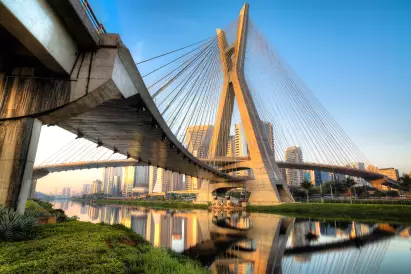
Sciences Po has opened a regional hub in São Paulo, hosted by the France-Brazil Chamber of Commerce, to strengthen academic partnerships, expand research collaboration and support students and alumni across Latin America and the Caribbean.
Explore how AI is transforming universities worldwide—its tools, challenges, and the strategic steps necessary for ethical and effective integration.

Dive deep into what makes the University of Cape Town the top-ranked university in Africa in 2025, from rankings and research to student life and social impact.
