
Eduniversal Best Masters in Executive MBA in India
This comprehensive article presents a data-rich analysis of the Executive MBA (EMBA) market in India for 2025. It explores market growth, shifting demand, curriculum innovations, required skills, outcomes, policies, and evolving recognition frameworks. Drawing on key trends, it highlights the EMBA as a powerful tool for leadership and professional growth.
Discover in detail the Master in Executive MBA in India
India’s Executive MBA Market: Size and Evolving Context
India’s management education sector is witnessing unprecedentedSummary: Discover the future of Executive MBA (EMBA) programs in India for 2025. This in-depth article explores growth trends, curriculum innovations, skills in demand, salary benchmarks, and regulatory frameworks shaping the management education landscape for mid-career professionals.
India’s Executive MBA Market: Size and Evolving Context
India’s management education sector is witnessing unprecedented growth. The total MBA education market is projected to double from $9.87 billion in 2024 to $19.13 billion by 2033, at a CAGR of 7.63%. A significant contributor to this surge is the expanding Executive MBA (EMBA) segment.
Executive education in India is on a steep growth trajectory, estimated to grow 19.9% between 2022 and 2027. The Executive MBA sub-segment alone is expected to touch ₹2,090 crores by 2029, up from ₹1,480 crores in 2024.
Participant demographics reveal clear trends: the typical Executive MBA student is aged between 30–45 years and has 5–12 years of professional experience. Increasing participation also comes from tier-2 and tier-3 cities, as well as a rising number of women professionals.
Industries such as GCCs, IT services, BFSI, and consulting continue to dominate MBA hiring, contributing to the growing interest in EMBA programs.
Several macroeconomic drivers are fueling this expansion:
- India’s vision for a $5 trillion GDP
- Rapid adoption of AI, analytics, and cloud technologies
- Leadership and strategy skill gaps in corporations
- Supportive government initiatives for skilling and education
- India's enhanced attractiveness for global investors and talent
Readers interested in broader management programs may also explore General Management programs and full-time MBA options.
Curriculum Evolution and Executive MBA Demand in 2025
The structure and themes of Executive MBA programs in India are rapidly evolving with 2025 marking a turning point driven by flexibility and tech-focused learning. Key in-demand disciplines include:
- Digital transformation and AI integration
- Data analytics and business intelligence
- FinTech innovations
- Healthcare management
- Supply chain and logistics
- ESG practices and sustainability frameworks
EMBA curricula blend fundamental management courses with technical competencies in AI, data science, and cybersecurity. Experiential learning is a pillar, integrating live projects, industry consulting, simulations, and global immersion programs in countries such as China, Japan, and regions in Africa.
Stackable micro-credentials and modular courses allow flexible pathways to a full EMBA qualification. AI-powered learning management systems personalize course deliveries based on predictive analytics and learner behavior.
To understand digital integration better, explore programs in E-Business and Digital Marketing.
Skills Development and Executive Career Outcomes
Employers today expect Executive MBA holders to be equipped with not just technical mastery but also essential transversal skills. Top technical competencies include:
- Data analysis and visualization
- Business applications of AI and machine learning
- Digital commerce and marketing strategy
- Advanced financial modeling and risk metrics
- Supply chain and operations optimization
Transversal soft skills in demand:
- Strategic decision-making and planning
- Leadership under uncertainty
- Innovation-focused thinking
- Cross-cultural business communication
- Ethical leadership and sustainability
Graduates transition to senior management and C-suite roles. Executive MBAs from premier institutions report average salaries between ₹30–35 lakh/annum, with peak salaries soaring past ₹80 lakh. Promotions occur during or immediately after program completion for 63% of participants.
Embedded internships and capstone projects with real-world organizations are now integral, emphasizing immediate employability.
Explore complementary themes in consulting and strategy programs.
Quality Standards, Accreditation, and Global Recognition
Quality assurance in India’s EMBA space is multifaceted. Leading programs are hosted by IIMs, IITs, top-tier private universities, and digital universities. Many are now pursuing global accreditations such as AACSB, AMBA, and EQUIS.
The format varies: some EMBAs confer full degrees, while others offer diplomas or certificates. Industry reputation now hinges on brand credibility, real-world outcomes, and curriculum structure over nomenclature.
International recognition is improving, particularly as institutions forge academic partnerships and dual-degree opportunities with global universities. The emergence of credit transfers and global networking enhances the position of Indian EMBAs.
To delve into cross-disciplinary integration, explore Business Intelligence and Strategy programs.
Cost, Accessibility, and ROI of Executive MBAs
Executive MBA tuition in India remains diverse depending on delivery mode and institute ranking:
- Top-tier programs: ₹15–30 lakh
- Mid-range/online models: ₹3–10 lakh
- Budget-friendly online EMBAs: ₹1–3 lakh
Financing options include employer sponsorship (common in MNCs and GCCs), merit scholarships, EMI schemes, and bank loans. Return on investment is driven by significant salary increases, career pivots, and promotion potential.
Institutions are also creating options for lifelong learning by giving alumni access to new modules and corporate curriculum partnerships.
Learn about financial specialization opportunities via Corporate Finance programs.
Market Competition and International Dynamics
The Indian EMBA landscape is increasingly competitive and global. While some working Indian professionals still pursue EMBA programs in the US and UK, this is slowly declining due to higher costs and unpredictable immigration regulations.
Indian schools are stepping up with globally collaborative programs that include dual degrees and international campus immersions. Online EdTech platforms such as UpGrad, edX, and Coursera partner with premier Indian and international institutions to scale delivery with top-tier content.
This positions India not only as an educational powerhouse but increasingly as a global destination for Executive MBAs.
To explore global program competitiveness, check out the Executive MBA global rankings.
Challenges and Strategic Risks
Despite encouraging momentum, the Executive MBA market in India has pressing challenges:
- Affordability for professionals in mid-tier income segments
- Variability in faculty quality, especially for AI, data, and ESG disciplines
- Inconsistent digital infrastructure in tier-2/tier-3 regions
- Misalignment between curriculum and workforce needs
- Proliferation of low-quality institutions
Addressing these areas will be crucial for India’s management education sector to fulfill its national economic aspirations.
For further interest in sustainable frameworks, browse Sustainable Development and Management programs.
Future Outlook for Executive MBA India (2025–2028)
The trajectory of Executive MBA programs in India between 2025 and 2028 signals robust growth:
- Expected surpassing of the ₹2,000 crore education milestone
- Dominance of hybrid learning ecosystems
- Integration of AI, data, and sustainability as key learning modules
In a favorable policy scenario with enhanced regulation, corporate facilitation, and infrastructure investment, India can evolve into a global epicenter for Executive Management Education.
Anticipated key areas of innovation include:
- Personalized, AI-integrated learning journeys
- Expansion of stackable micro-credentialing
- Dual-degree collaborations with international B-schools
- ESG-centric leadership education
Discover the Eduniversal Best Masters for Executive MBA

India
India
India
India
India
India
India
India
India
India
India
Latest news
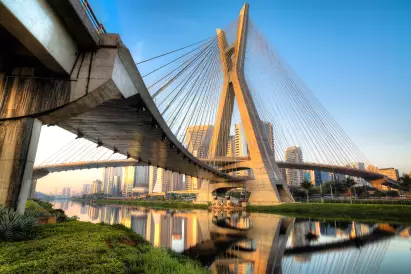
Sciences Po has opened a regional hub in São Paulo, hosted by the France-Brazil Chamber of Commerce, to strengthen academic partnerships, expand research collaboration and support students and alumni across Latin America and the Caribbean.
Explore how AI is transforming universities worldwide—its tools, challenges, and the strategic steps necessary for ethical and effective integration.

Dive deep into what makes the University of Cape Town the top-ranked university in Africa in 2025, from rankings and research to student life and social impact.
