Eduniversal Best Masters in Economics in Ireland
Explore a comprehensive analysis of Ireland’s Master’s in Economics landscape in 2025, including market size, curriculum evolution, employment opportunities, costs, and international competitiveness. Gain insights into emerging trends like AI integration, interdisciplinary learning, and data analytics. Stay updated on the national outlook for economics postgraduate education through 2028.
Discover in detail the Master in Economics in Ireland
Overview of the Economics Master's Market in Ireland (2025)
Ireland’s master’s level education continues its upward trajectory, with a prominent role played by economics programs. In the academic cycle 2024/25, Ireland saw postgraduate enrolments surge by 7.6%, hitting 66,535 students. Taught master’s programs—the primary method of instruction for economics—grew by 9.8%, totalingOverview of the Economics Master's Market in Ireland (2025)
Ireland’s master’s level education continues its upward trajectory, with a prominent role played by economics programs. In the academic cycle 2024/25, Ireland saw postgraduate enrolments surge by 7.6%, hitting 66,535 students.
Taught master’s programs—the primary method of instruction for economics—grew by 9.8%, totaling over 34,000 enrollees. Although discipline-specific data is partial, economics forms a large part of Ireland’s thriving business and social sciences streams.
The profile of economics students is rapidly changing. An increasingly global academic community is forming—48.7% of Ireland’s postgraduates in 2024/25 are international students. Furthermore, the average master's student in economics is aged 31.5 years, indicating mature professionals with prior industry experience. This stands in contrast to younger demographics across other OECD nations.
Several macroeconomic and policy variables are fueling this trend. Ireland’s robust economic outlook, heightened focus on sustainability, and its positioning as a digital and data innovation hub are stimulating the demand for advanced economic education. Meanwhile, integration with EU policy and skill shortages in the labor market enhance the relevance of programs in economics.
Curriculum Trends and Learning Formats in 2025
The master's in economics curriculum in Ireland has embraced an interdisciplinary philosophy. Programs blend classical training in microeconomics, macroeconomics and econometrics, with forward-looking tools such as machine learning, statistical programming, and data analytics. Many institutions offer programs that intersect with data analytics and computer science for real-world economic problem-solving.
Academically, institutions are experimenting with new hybrid delivery formats—on-campus instruction is now accompanied by flexible online modules and blended learning. These delivery channels are designed for professionals seeking career advancement via part-time and adaptive study paths. Modular course design and micro-credentials have gained traction among those targeting specialized knowledge segments.
Applied learning components—internships, industrial collaboration, and public sector partnerships—augment classroom experience. Capstones and research projects further hone policy-relevant, data-centered practice. These align well with Ireland’s increasing emphasis on big data and public policy intelligence—skills pivotal in sectors like financial markets and consultancy.
Graduate Competencies and Employment Outcomes
Leading economics programs in Ireland focus equally on technical mastery and soft skills. Employers are interested not only in economic modeling and forecasting abilities, but also communication, strategic thinking, and business acumen. Top-tier programs in the field emphasize core knowledge across microeconomics, macroeconomics, and econometrics, underpinned by technical expertise in Python, R, Stata, or SQL.
Graduates land roles in a wide spectrum of industries, including:
- Policy analysis positions within government agencies
- Private economic and financial consultancies
- Investment banking and asset management companies
- Tech-sector roles for economic modellers and data scientists
Internships play a central role in enriching employability. Industry-academic integration is prominent, with employers often collaborating during program design. Comparatively higher employment and salary outcomes for economics graduates, in contrast to bachelor’s degree holders, contribute to their strong ROI across OECD countries.
Institutional Quality and International Recognition
Program quality in Ireland is overseen by the Higher Education Authority (HEA) and adheres to the European Higher Education Area (EHEA) standards. This ensures that Irish master’s degrees in economics maintain academic rigor and pan-European recognition.
In addition, favorable immigration and post-study work visa options boost Ireland's attractiveness. These policies support the long-term career goals of international students and have led to continuous expansion of foreign student enrollment, especially in domains like health economics and public policy.
Cost Considerations, Access, and Funding Paths
Pursuing a master's in economics in Ireland requires a financial commitment, with tuition fees ranging from €17,000 to €22,000 depending on the institution. However, a number of funding mechanisms exist to support student access:
- Government-funded scholarship programs
- University-specific financial aid
- Employer-sponsored study for professionals
For working professionals, part-time formats and hybrid courses increase access while preserving career continuity. The strong job prospects and high employability score make the investment in an economics master's feasible for many, particularly those in corporate finance or public analysis roles.
Global Competitiveness and International Participation
Ireland’s master’s programs in economics are thriving in a competitive landscape. In 2024 alone, international postgraduate enrollments climbed by 15%, reinforcing Ireland’s global appeal. With English as the language of instruction, and competitive academic quality, Irish institutions are strong contenders among UK and continental European universities.
Cross-border academic partnerships and dual-degree tracks are also growing. These arrangements enable interchange with institutions in the US, Asia, and Europe. Ireland’s openness to EdTech innovation allows its universities to push boundaries on digitally enabled and remote collaboration in economic education and research. Similar digital-forward strategies can be seen in areas like digital marketing.
Risks and Strategic Challenges
Despite positive trends, several risk factors impact future growth:
- Affordability pressures: tuition and housing costs threaten accessibility
- Faculty shortages: academic talent is stretched thin amid rising enrolments
- Curriculum alignment: agile course updates are needed to reflect fast-changing industry demand
- Research infrastructure: labs and data platforms must scale to meet innovation needs
Continued technological adoption in education is essential. Evolving pedagogy incorporating tools like AI and economic simulation modeling must stay ahead of the curve to ensure program competitiveness.
Future Outlook: 2025 to 2028
Looking ahead, Ireland’s economics education sector is expected to maintain a path of moderate enrollment and curriculum growth. Emphasis on interdisciplinarity, programming knowledge, and real-world data applications will continue.
Optimistic scenarios forecast increased government investment in economics education infrastructure, enhanced funding strategies, and stronger international positioning. Partnerships and EdTech integration may render Irish programs even more globally accessible.
Key areas to watch include:
- Micro-credentials for continued professional development
- AI and big data training embedded in core economics modules
- Academic-industry joint ventures for economic policy modeling
- Visa facilitation programs targeting high-demand international talent
Discover the Eduniversal Best Masters for Economics

Ireland
Ireland
Latest news
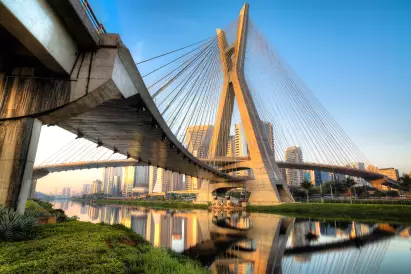
Sciences Po has opened a regional hub in São Paulo, hosted by the France-Brazil Chamber of Commerce, to strengthen academic partnerships, expand research collaboration and support students and alumni across Latin America and the Caribbean.
Explore how AI is transforming universities worldwide—its tools, challenges, and the strategic steps necessary for ethical and effective integration.

Dive deep into what makes the University of Cape Town the top-ranked university in Africa in 2025, from rankings and research to student life and social impact.
